On September 30, 2026, EDG's C++ front end went open source, with The C++ Alliance as its nonprofit home. What changes for EDG users, how to contribute, and where to follow the work.
75 comments
https://en.wikipedia.org/wiki/Edison_Design_Group ref 9: https://herbsutter.com/2025/11/10/trip-report-november-2025-...
Also, since i mentioned Lazarus, if it can compile itself to Free Pascal, i wonder if it'd be useful for adding C++ support to Lazarus itself so that Free Pascal and C/C++ can be mixed in a project to make self-contained executables for desktop applications. It'd most likely need much more work than that just the compilation to make it a first class citizen like Free Pascal itself is for Lazarus/LCL (e.g. things like the object inspector and code tools being able to understand C++ well enough so that refactoring and stuff like doubleclicking on a button in a form automatically declaring and defining the handler and moving the editor cursor to the newly defined handler's code body), but maybe it could be used as a starting point.
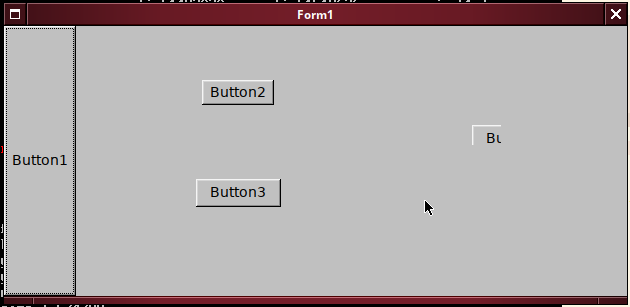
You can already mix Free Pascal with C/C++ code if you use the same linker and libraries - i did manage to get FLTK statically linked with an initial backend for Lazarus in fact - this shot[0] shows a form and a few buttons from a self-contained binary on Linux (it links against FLTK statically and X11/etc dynamically).
But it is a PITA to get working for C++ libraries specifically (and you need a C intermediate for FPC to use). Also i couldn't get it to work for Win32, only Linux.
[0] http://runtimeterror.com/pages/iv/images/8a6ff400ed9b0d424be...
For background -- and I am not an expert here -- their C++ frontend is widely known. I first heard of it because Visual C++'s Intellisense uses it, which was notable because VC does not use the msvc frontend for its own completion. I understand it's been either used or evaluated for other frontends in the past too. I worked as PM for one C++ product, and was fortunate to be able to learn a lot from our engineers; we didn't use it, but they thought highly of EDG.
It has a very strong reputation for being correct. And as such, I think open sourcing it will be a very beneficial thing for the C++ community.
The reason why the EDG frontend is being open-sourced is because EDG itself is closing up shop, and the open sourcing is an interim solution as EDG's customers work on migrating to using Clang instead. So... it's really not good news, because it means that one of the frontends is basically reaching end-of-life.
But also quite sad. They've announced that they are closing down.
The source code itself: https://github.com/edgcpp/compiler
Documentation: https://edgcpp.org/doc/
And for those curious the license SPDX is: Apache-2.0 WITH LLVM-exception
i.e.
    > LLVM Exceptions to the Apache 2.0 License

    > As an exception, if, as a result of your compiling your source code, portions of this Software are embedded into an Object form of such source code, you may redistribute such embedded portions in such Object form without complying with the conditions of Sections 4(a), 4(b) and 4(d) of the License.

    > In addition, if you combine or link compiled forms of this Software with software that is licensed under the GPLv2 ("Combined Software") and if a court of competent jurisdiction determines that the patent provision (Section 3), the indemnity provision (Section 9) or other Section of the License conflicts with the conditions of the GPLv2, you may retroactively and prospectively choose to deem waived or otherwise exclude such Section(s) of the License, but only in their entirety and only with respect to the Combined Software.
Read the full thread on Hacker News →
Related stories
- Hacker News · 1 points · 6 days ago
- Hacker News · 1 points · 2 days ago
- Hacker News · 421 points · 6 days ago
- Hacker News · 3 points · 3 days ago
- Hacker News · 1 points · 4 days ago
- Hacker News · 2 points · about 11 hours ago